
 Dutch Golden Age
Preview image — download the full-resolution TIF after purchase
Basic Information
Historical Context
Tavern interior scenes were a popular genre in Dutch Golden Age painting, reflecting the important role of inns and taverns in seventeenth-century Dutch social life. These establishments served as gathering places for drinking, eating, playing games, conducting business, and hearing news, and they provided artists with rich subject matter for exploring human behavior and social interaction. Cuyp's tavern scene, with its strong light from a window and two men toasting, follows the tradition of interior genre painting practiced by artists such as Jan Steen, Pieter de Hooch, and Gerard ter Borch. The presence of a lute, feathers, and a sword suggests the men may be soldiers or gentlemen of fortune, adding a note of romantic adventure to the everyday setting. The view out the window onto a Dutch street is a classic device of Dutch interior painting, linking the intimate indoor space to the wider world beyond.
Artistic Appreciation
This interior genre scene demonstrates that Cuyp's talents extended beyond landscape and portrait into the realm of Dutch genre painting. The composition is structured around the strong vertical of the window on the left, which serves as both the primary light source and a window onto the world outside. The two men -- one standing, one seated -- form a dialogical pair whose interaction provides the narrative focus of the scene. Cuyp's handling of light is particularly impressive: the strong directional light from the window creates dramatic patterns of illumination and shadow, sculpting the forms of the figures and objects and giving the interior a palpable sense of space and atmosphere. This chiaroscuro effect -- with brightly lit areas contrasting sharply with deep shadows -- is reminiscent of Rembrandt's studio lighting and adds a theatrical quality to the everyday scene. The rendering of textures is accomplished: the rough wood of the barrels, the soft fabric of the clothing, the glass of the wine goblet, and the feathers of the hat and bird are all differentiated with sensitivity. The view through the window, though small, is rendered with the care of a landscape painting, providing a glimpse of the outside world and a connection to Cuyp's primary metier. The red sash of the seated man is a notable color accent, its bright hue standing out vividly against the darker tones of the interior. The overall mood is one of relaxed conviviality -- two men enjoying a drink and a conversation in the warm, dim interior of a tavern, a moment of everyday pleasure captured with the skill and atmosphere of a master painter. ---
Interior Tavern Scene with Two Men Toasting by a Window
Visual Description
An interior scene of a tavern or inn room, dimly lit with strong light coming from a tall window on the left. The walls and ceiling are dark brown, creating a warm, enclosed atmosphere. On the left, a standing man has his back to the viewer, facing the window. He wears a black broad-brimmed hat, a long black coat, white stockings, and black shoes. His right hand is raised, holding a wine glass (goblet) up toward the window light, and his left hand hangs naturally at his side. On the right, a seated man sits on a large barrel, facing the standing man. He wears a loose white shirt with lace cuffs, a red cloth draped over his shoulder (an officer's sash or cloak), white knee-length breeches, and boots, with a sword at his waist. A feathered hat leans against his side. He looks up at the standing man with a relaxed expression. Several wooden barrels (wine casks) fill the room: a large barrel by the window on the left, the barrel the seated man sits on, and several more stacked on the right side. A lute or similar stringed instrument leans against a barrel in the lower right corner. A bucket or pail stands nearby. On the floor, scattered items include a feathered hat and other small objects. On the wall in the upper right, a dead bird (game bird, like a pheasant or duck) hangs as decoration or stored game. Through the large window on the left, a Dutch city street scene is visible: gabled buildings, a pointed tower, and pedestrians on the street. The light from the window strongly illuminates the standing man's back and shoulders, the window sill, and parts of the seated man, creating dramatic chiaroscuro with deep shadows in the rest of the room.
Specifications
Order a Print
museum-quality prints of this artwork, shipped to your door
Subscribers save 30% on all prints
Free standard shipping (5-10 business days) · Ships from US
Instant download after payment — $1.99 per artwork
Re-download anytime from your account — no expiration
Commercial license included in every purchase
Or subscribe for $9.99/month — unlimited downloads
More from
Aelbert Cuyp
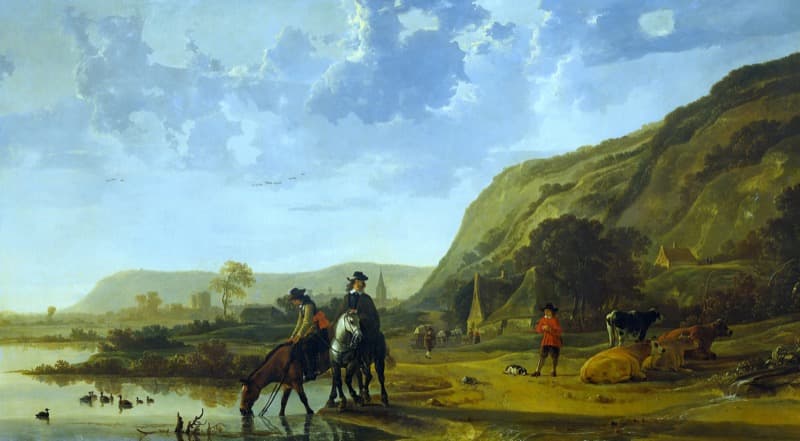
River Landscape with Horsemen Fording a River
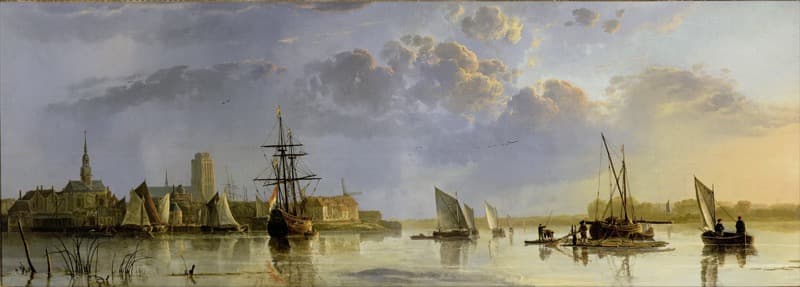
River View of a Dutch Town with Sailing Ships
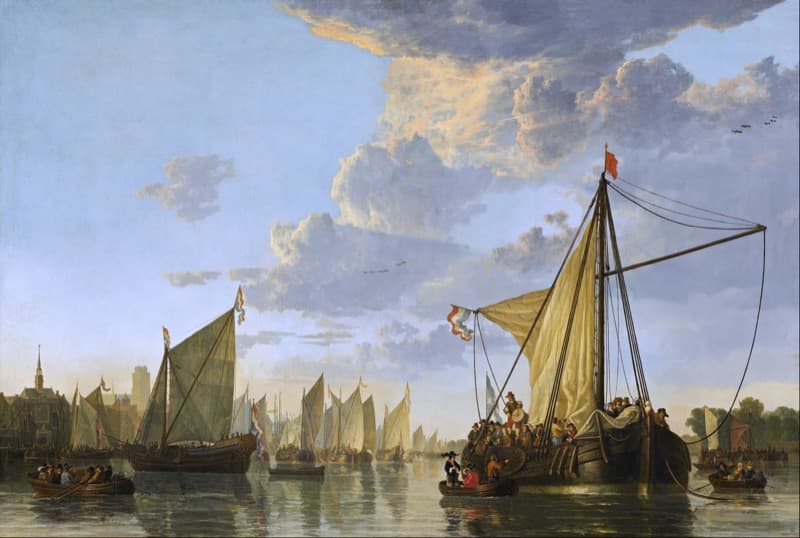
Harbor Scene with a Fleet of Sailing Ships
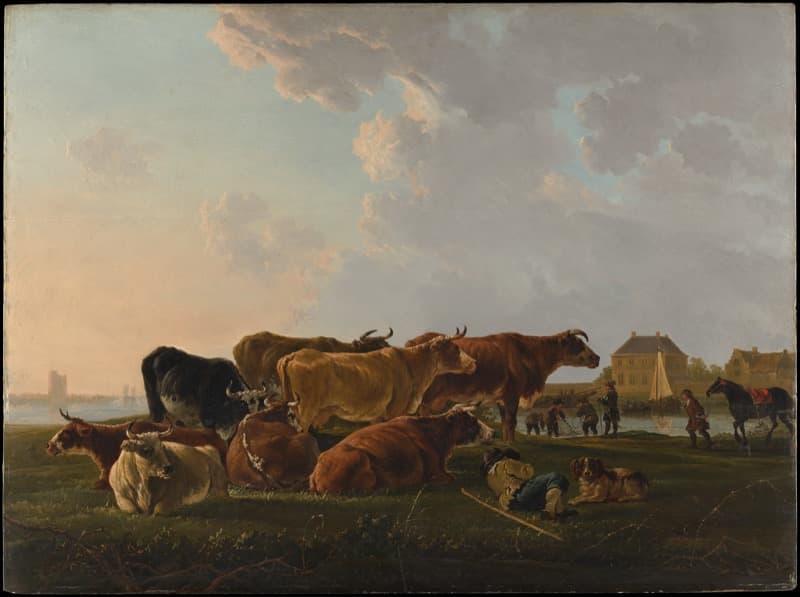
River Landscape with Travelers on a Donkey and Cattle by a Wooden Bridge
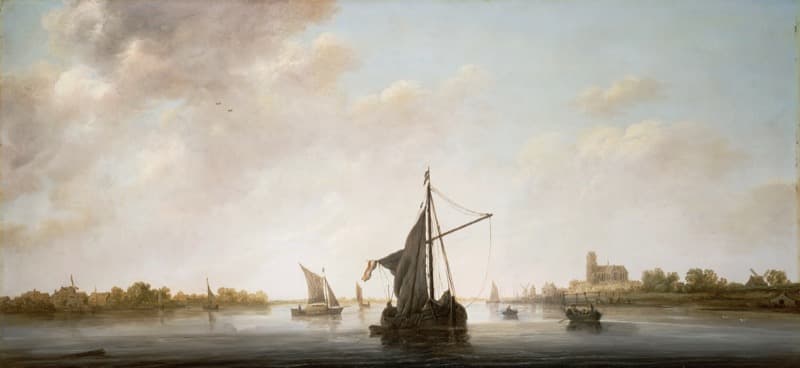
Wide River Landscape with Sailing Vessels and a Distant Town
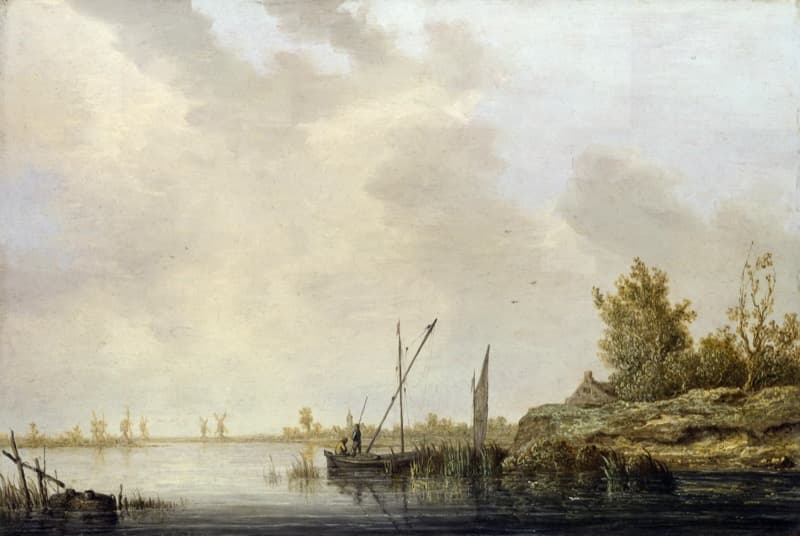
River View with a Small Sailboat near a Farmhouse
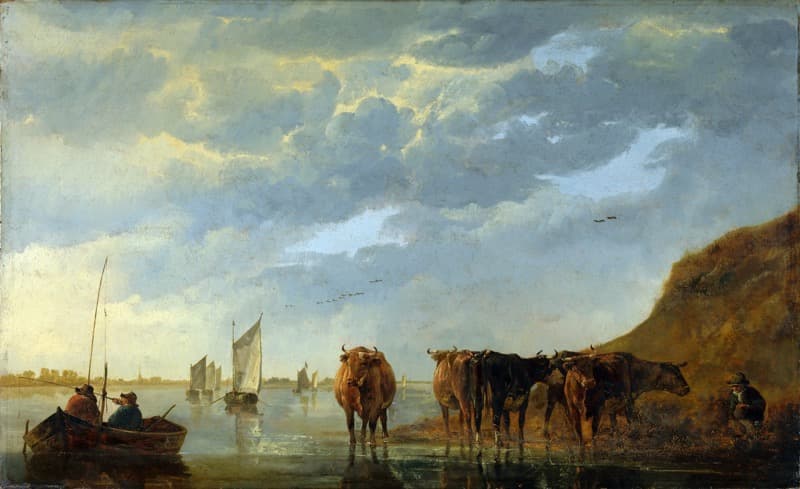
Cattle Wading in a River with Fishing Boats and a Dune Landscape
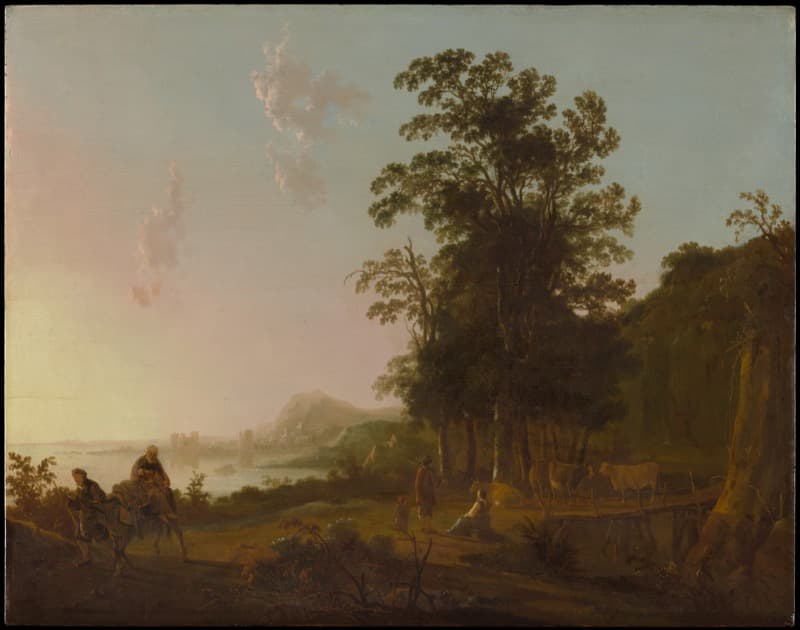
River Landscape at Dusk with Travelers and Cattle by a Bridge