 Pin-up Art
Preview image — download the full-resolution TIF after purchase
Basic Information
Historical Context
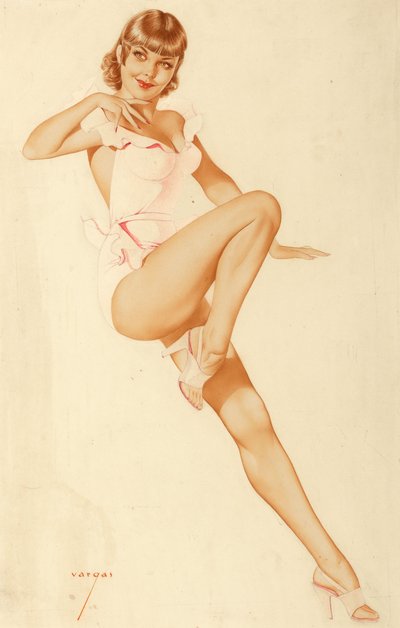
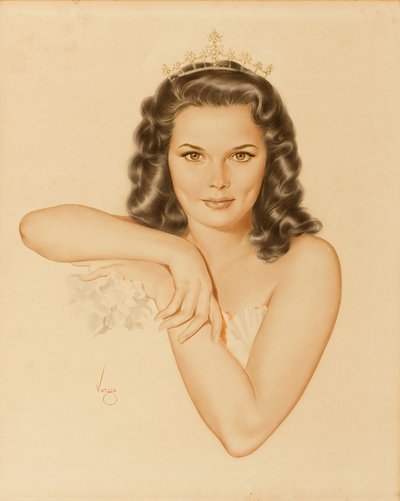
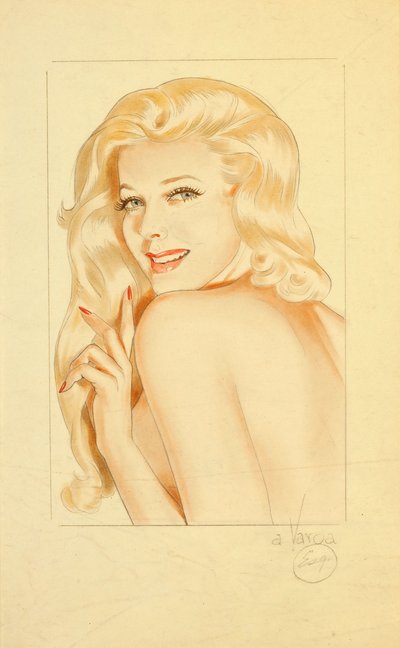
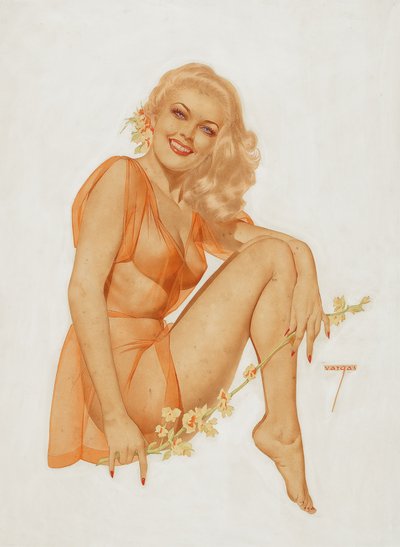
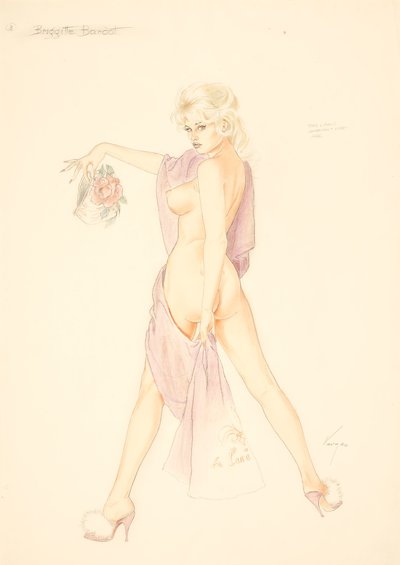
Created during Vargas's celebrated Playboy period (1959-1974), this work was produced for Hugh Hefner's magazine at a time when Vargas was experiencing a spectacular career resurgence. The Playboy years gave Vargas creative freedom, financial security, and access to a massive audience. Unlike the wartime context of his Esquire work, the Playboy era unfolded during a period of sexual revolution and changing social mores. Vargas's images became more openly sensual, featuring lingerie, bedroom settings, and poses that pushed the boundaries of mainstream erotic art. The 'Vargas Girl'—now spelled with his proper name—became as iconic as the earlier 'Varga Girl.'
Artistic Appreciation
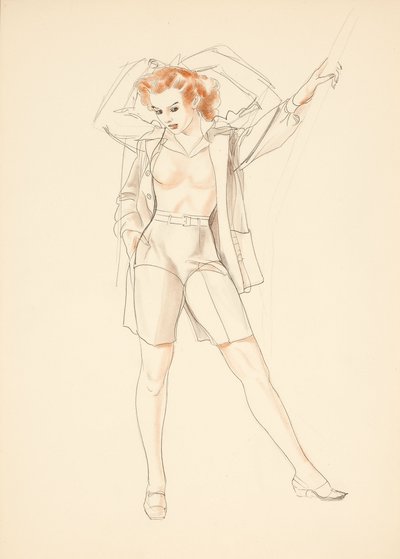
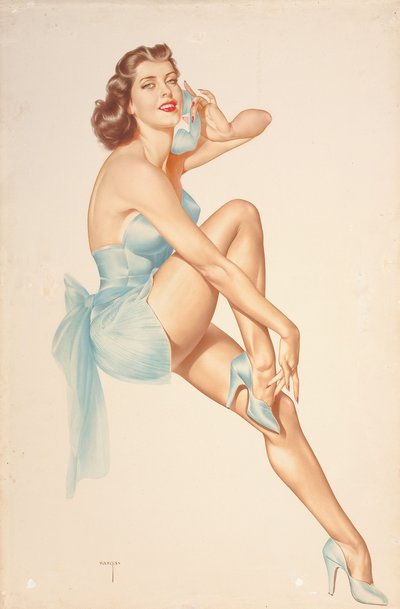
Technically, this Playboy-era work represents the absolute pinnacle of Vargas's airbrush mastery. By the 1960s, he had been using the tool for over two decades, and his control was absolute. The surface of these paintings approaches photographic perfection while retaining the interpretive warmth of hand-rendered art. The composition reflects the influence of color photography and cinema on his later style, with more complex environmental settings and lighting scenarios. The 'Vargas' signature—restored to its proper spelling—marks these works as products of his artistic independence following the Esquire years. These paintings also document the evolution of American erotic imagery from the coded suggestiveness of the 1940s to the more explicit visual language of the sexual revolution.
The Crystal Chandelier
Visual Description
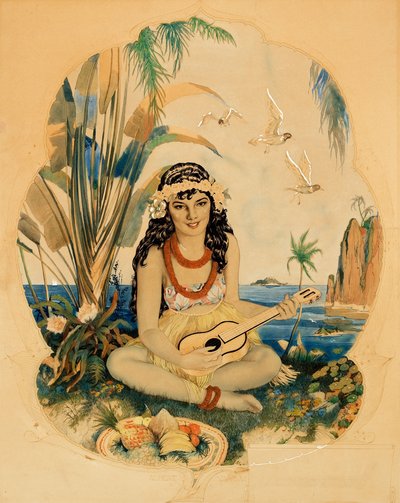
The figure is rendered with the flawless, poreless perfection that Vargas achieved in his Playboy years, surpassing even the technical polish of his Esquire era. She wears lingerie, a bikini, or a sheer negligee that reveals more of the body than wartime censorship would have permitted. The setting suggests intimacy and luxury—satin sheets, velvet drapes, or a tropical paradise. The color palette features the pastel tones that became associated with Playboy's visual identity: baby pinks, powder blues, creamy whites, and soft lavenders. Her expression is confident and sensual, embodying the sexual liberation ethos of the 1960s and 1970s.
Specifications
Order a Print
museum-quality prints of this artwork, shipped to your door
Subscribers save 30% on all prints
Free standard shipping (5-10 business days) · Ships from US
Instant download after payment — $1.99 per artwork
Re-download anytime from your account — no expiration
Commercial license included in every purchase
Or subscribe for $9.99/month — unlimited downloads
Community
Customer Reviews
Leave a Review
Loading comments...